
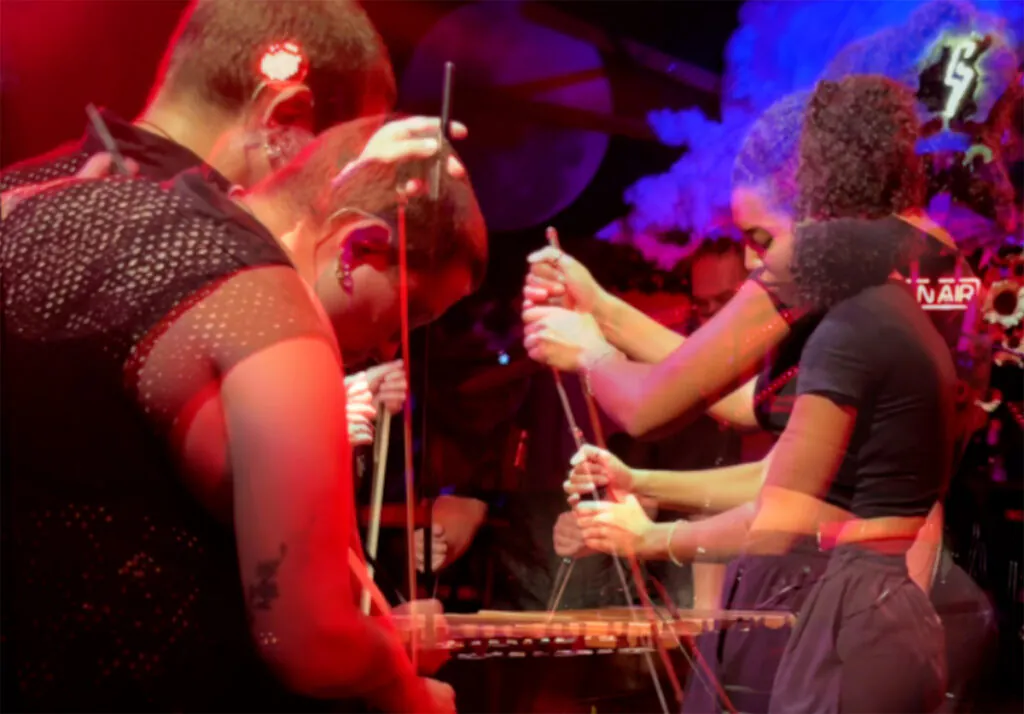
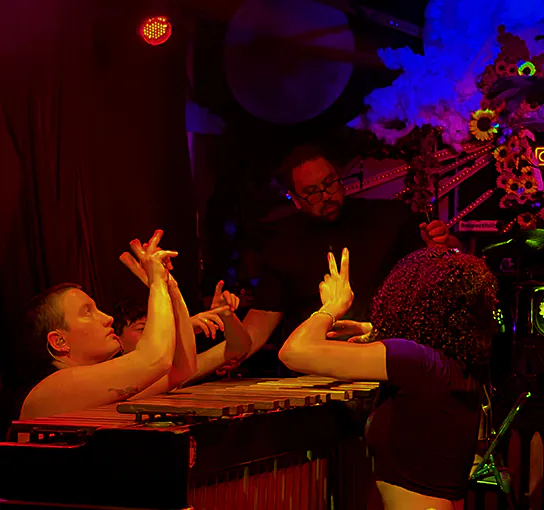
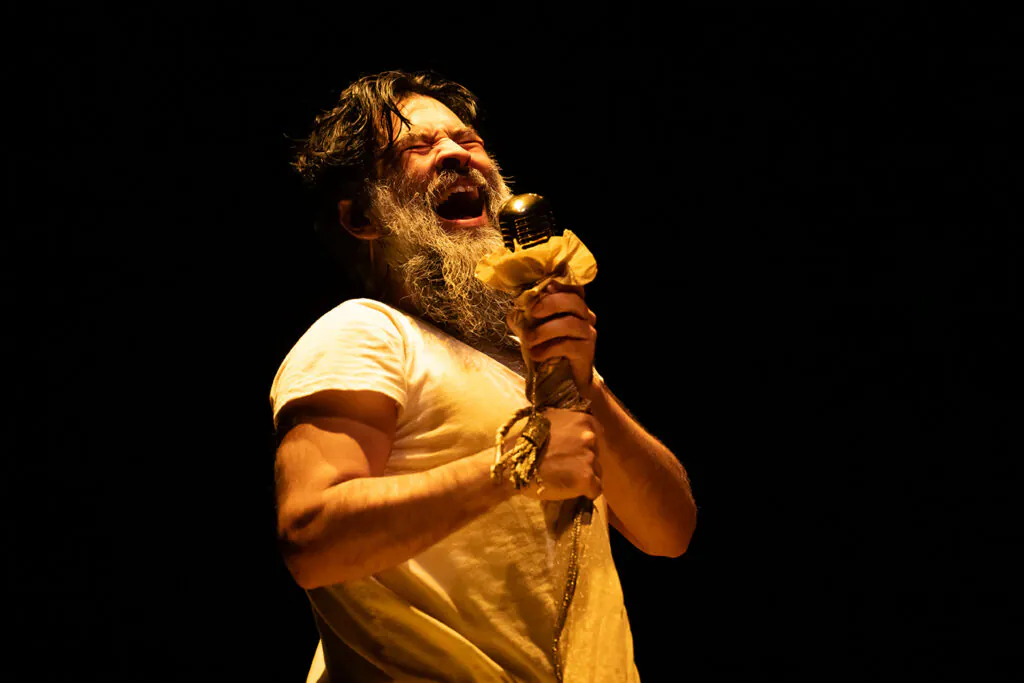
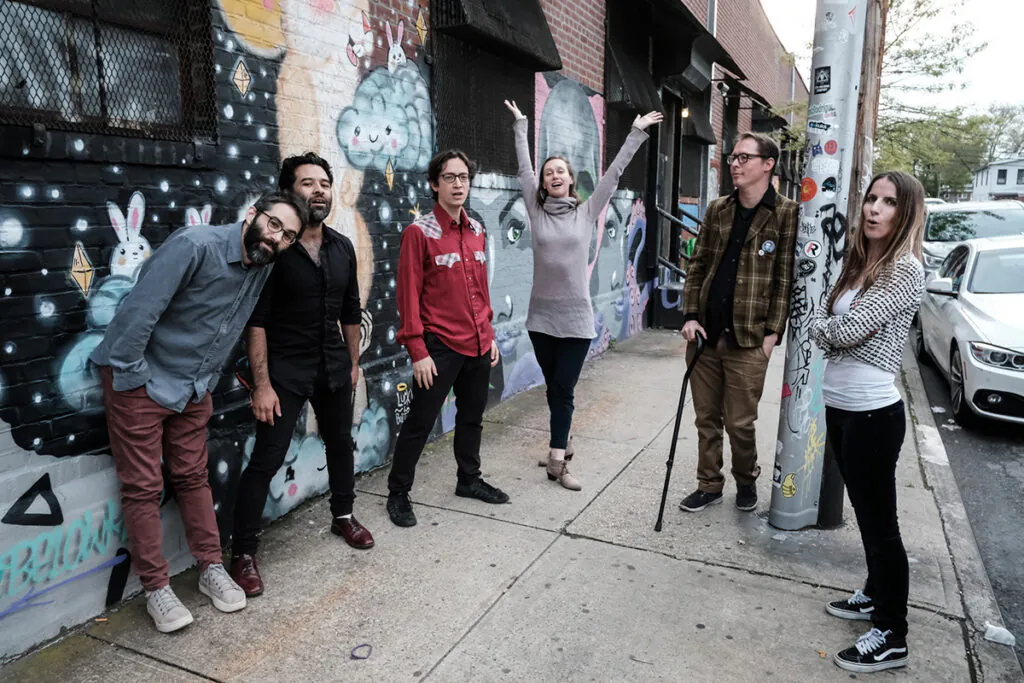
photo credit: Ken Adessa, Steven Pisano, Reuben Radding
Estebanico is the first full hour of music from Paul Pinto‘s epic five-hour multilingual musical theater composition exploring the colonization of American land and colorization of American mythology from the standpoint of an enigmatic 16th century “explorer.” This operatic spectacle spans 500 years and is intended to eventually feature percussion-playing singers, a chorus, a chamber orchestra, dancers, pipe organ, live electronics and multichannel audio video.
For its “Under Construction” workshop premiere as part of Under the Radar, it features Paul alongside musicians from Mantra Percussion, Recap Percussion and thingNY.
Unknown by many names, “Estebanico” (often referred to as Mustafa Zammouri) is referred to in Spanish colonial relaciónes as a Black Arab from Morocco, brought by force to the New World in a failed expedition to conquer La Florida. This enslaved polyglot and a trio of Spaniards (the only known survivors) roamed the peopled wilderness of North America for eight years as naked equals, slaves, shamans and physicians. Esteban disappeared into Zuni territory in 1539. Three hundred years later, the Buffalo Soldiers would advocate that this Black man “discovered” New Mexico. Today’s scholars are convinced his visage lives on as a modern kashina (or sacred doll) of the southwest pueblos. Both captive and conqueror, Estebanico continues to confound as a silent myth, claimed and disowned by the modern southwest Puebloan, the 16th Century Spanish capitalist, the 19th Century Black American military, and nationalists, scholars, skeptics and evangelists on both sides of the Atlantic ocean. This inaugural theatrical concert strands Esteban in Florida (for our purposes, a purgatory no one intended to crash into and everyone wants to leave), amidst white conquest for gold and brown musings on language, empire and immigration.
“One of the most exceptional composers in new music… in a society run by artists, he would be president.”
– THE WIRE
CREDITS
Performed by Musicians from Mantra Percussion, Recap Percussion and thingNY
ABOUT THE ARTISTS
Hailed by The Wire as “one of the most exceptional composers in new music, with a sensibility that can handle deadly seriousness and wicked humour,” Paul Pinto is a multi-disciplinary dabbler who makes opera-theater, installation, video art and durational performance, sometimes with his longtime friends thingNY and Varispeed and sometimes alone in his bedroom. Some highlights include Meredith Monk’s Indra’s Net, Patriots with Jeff Young, Gelsey Bell’s mɔɹnɪŋ, Peter Maxwell Davies’ Eight Songs for a Mad King, the cyclorama video installation Whiteness with Kameron Neal, an ongoing re-arrangement of Robert Ashley’s Perfect Lives, and his first opera Thomas Paine in Violence with Joan La Barbara. He sang and danced on Broadway in Dave Malloy’s Natasha, Pierre and the Great Comet of 1812 and created many tiny performances during the pandemic for Zoom, television, headphones and the U.S. mail. Recent and upcoming projects include the operatic monodrama MANO A MANO (Kristin Marting, LaMaMa), Water Music (Con Vivo Music, Gold Bolus Recordings), The All-Father (a new take on Wagner’s Ring Cycle) and the multilingual multimedia epic Estebanico (Democracy Cycle, Perelman Arts Center). Born and raised in Queens as a child of immigrants, Paul now proudly calls Jersey City his home as that’s where his wife, child and vegetable garden are.
FUNDING + SUPPORT
Commissioned and development support provided by The Democracy Cycle, a program of Perelman Performing Arts Center PAC | NYC and Civis Foundation. This presentation is made possible by the support of thingNY and Mantra Percussion.
VENUE NOTES + ACCESSIBILITY
Merkin Hall at Kaufman Music Center
129 W 67th St, Manhattan, NYC
Access
Merkin Hall is a ground-level building with signs posted that prohibit parking in front of its entrance. From the sidewalk, the accessible path to the Hall (and the rest of Kaufman Music Center) starts with a door that leads to the Center’s lobby and can be opened by tapping an automatic electronic opener that is located well within the reach of a chair-bound visitor. Once within the main lobby of Kaufman Music Center, the visitor can access the box office and pass through the box office area onto a landing which overlooks Merkin Hall’s lobby. From the landing a lift (operated by Merkin Hall staff) can lower a chair-bound or mobility impaired visitor to the Hall’s lobby where an usher assists the visitor to get to their seat. In the Hall’s lobby, there is an elevator that leads patrons to the second floor. There are three integrated wheelchair-accessible theater seats dispersed in different locations throughout the Hall, and two aisle transfer seats in the back row of the orchestra level. Wheelchair seats may be purchased by phone or in person during regular box office hours. If possible, we recommend purchasing wheelchair seats at least one day in advance of performances (this is not required). The Hall also includes way-finding signage, an aisle lighting system, ADA-accessible backstage area, fully accessible restrooms and a water fountain. Merkin Hall is also pleased to provide infrared listening devices for the hearing impaired upon request at the concessions stand.
If you have additional accessibility requests, please contact the Merkin Hall box office at boxoffice@kaufmanmusiccenter.org or 212 501 3330 and we will be glad to assist you.
Appropriate Age Range
Recommended for Mature Audiences
Content Warnings
Estebanico includes loud sounds and strong language.

SCHEDULE
Tuesday, January 19 at 7:30pm


VENUE
Merkin Hall at Kaufman Music Center
129 W 67th St.
Manhattan, NYC
map